
What to Do for Lent?
/
My life and spiritual Journey have moved and changed over the years. So where am I right now? What do I believe that the Lenten season is about?
Read MoreSearch the blog archives.
My life and spiritual Journey have moved and changed over the years. So where am I right now? What do I believe that the Lenten season is about?
Read MoreWisdom has built her house; she has set up its seven pillars. She has prepared her meat, mixed her wine, and set her table. She has sent out her servant girls to wave signs and call from the highest point of the city, ‘You who crave simplicity…Turn in here!’”
— Proverbs 9
One of my favorite places on Christy’s family farm in Arkansas is the Native American Marker Tree. Native American travelers required natural sources of food and water, good navigational skills, and a method of marking trails. They didn’t have neon signs or GPS. So, one of the ways they provided signposts and markers for their journeys was by wrapping a leather rope around a green sapling, so in time, it would grow in an obviously unnatural way to point the direction to a nearby village, water source, or natural shelter. It would have been a welcome sign to weary Native American travelers—pointing in the general direction of something especially important—something that was key to their journey and survival. I’m delighted to report that Anthropologists are now recording the locations of these trees so they can be preserved, protected, and honored as the significant cultural and historical artifacts they are.
God is also perpetually dropping signs and markers in front of us trying to get our attention on the journey—signs that say, “Go this way at the Crossroads!” Or “There are things that will nourish you this way! Turn in Here!” Our work is to listen and to be willing to adjust course and turn when the time comes - and to tune our Spiritual GPS into “Still-Speaking God” mode- So we can notice those sometimes-subtle signs and markers on the journey. The world will attempt to distract us with Vegas-style, darkness-shattering, flashing bright neon signs, bells, and whistles that scream “Stop here!” “Feel good here!” “Log in here!” “Get it here!” (And have your Cash, Visa, or MasterCard Ready!) But if we look carefully, beyond the clamor, deeper in the woods, into the deeper, quieter places, there are ancient, quiet, vine and moss-covered signs—signs that mark narrower but extremely rewarding paths. And there are twisted, well-worn, God-rooted markers that whisper directive and transformative words that point us toward spiritually transformative places called, “Forgiveness,” “Repentance,” “Justice,” “Compassion,” and “Stillness.”
The signs and markers of the Divine are present in the wilderness we are wandering at UCH. I invite you to tune in and learn to interpret those signs and markers. And when we have the good fortune of finding one pointing us in a new direction - let's cluster around it and celebrate the milestone (like we will be doing in our Congregational Gathering on Sunday). We are not going to stop for long. But we can rest, refuel, and regather at the crossroads. Then we will shift direction and follow God's direction down that wisdom path - a path that may seem very ancient. But is also completely new. I’ll see you on the journey. Many blessings as we travel the wilderness together.
A bustling village began growing up along the old Vallejo Road soon after the founding of Mission San Jose in 1797 providing services and goods to the nearby residents and wayfarers. Throngs of fortune seekers including John Fremont and Kit Carson passed through the village and over Mission Pass on their way to the gold fields in the mid 1800’s purchasing goods, and fresh Mission Valley grains, fruit and vegetables for their journey. By the end of the century Mission San Jose was providing a range of services including a hotel, general stores, boot makers, winery’s, an ample collection of Saloons, and horseshoe and wheel makers.
The sounds of clanging and hammering from the forge at Frank Martin’s Blacksmith Shop on Washington Blvd., could be heard across the dirt street at the old mission and for blocks around. Burton and Maria McIver, newly arrived in Mission San Jose from Canada and sensing the need for the continuation of horseshoeing, the forging of rural agricultural implements and metal work on motorcars purchased Martin’s historic business in 1927.
Within two decades the smithing business had faded and the McIvor’s began a fledgling hardware department in the front of the shop creating “McIvor Hardware and Farm Tools”. Son Bob joined growing family business in 1952 and encouraged his father to build a larger store next door and increase the hardware inventory to serve the newly formed city of Fremont and the growing number of contractors and do-it-yourself home owners. Bob and his wife Pauline ran the family business for nearly forty years before deciding to take the next step and create larger full-service Hardware business a block away on Ellsworth Street that was run by son-in-law Al Auer’s family in the final years.
Frank Martin’s original Blacksmith Shop still exists on Washington Blvd. and is now home to Firestone Photography, the Blvd. And recently vacated former Mission Roasting Company building was McIvor’s second location, and their imposing stucco building on Ellsworth Street has been vacant since Blvd. And 2018, a victim of competition from nearby Walmart, Home Depot and Lowe’s. Sadly, the third and final location of McIvor’s ninety-one-year-old historic family business sits behind a chain link fence and is designated by the city ironically as “future residential housing”.
Standing empty-handed before a hungry crowd at the end of a long day, the disciples ask Jesus to disperse the multitude. Jesus has other ideas.
Read MoreStanding empty-handed before a hungry crowd at the end of a long day, the disciples ask Jesus to disperse the multitude. Jesus has other ideas. The disciples probably shake their heads in disbelief, as they approach the 5,000 with 5 loaves and 2 fish. We know the story well, but sometimes overlook the significance of 12 baskets full of fragments. In other words, each disciple had to experience for himself, not merely observe, the awesome reality of gathering more that he started out with, even though in the form of fragments.
What does this story mean to you – since God is still speaking? Was there a time in your life when you thought you just were not going to make it? And yet, here you are today, capable of reading and reflecting. So, somehow in the midst of feeling “hungry” and empty handed, you were fed courage and strength to struggle forward.
Like the disciples, you too will be amazed if you gather the fragments of your daily experiences. Fragments are, after all, visible signs of an abundance often unrecognized. Can you allow yourself to bathe in the awesome reality of how you were “stranded” and then somehow fed, cared for, and rescued in ways you had not even imagined? Take a moment to cherish and relish your own unbelievable experiences. Blessings on your time of reflection as you discover the miracles that have taken place in your own Journey along the Way.
One of the most beloved of our UCH outreaches is South Hayward Parish, a service which UCH and several other churches in the area had enough foresight and compassion to bring into being over 50 years ago.
Read MoreThere are two parallel rows of olive trees wide enough for two wagons to pass along Mission Blvd in front of Ohlone College in Fremont’s Mission San Jose District. Surprisingly, the hardy trees have survived several centuries during the regions flourishing periods of agricultural, residential and commercial growth. Planted on the sacred ground by the Ohlone people under the direction of Franciscan friars in the late 1700’s, these remaining trees marked the original shaded approach to the fourteenth Spanish Mission for travelers from the mission at Santa Clara. The attractive and productive trees were grown at each of the Spanish Missions situated about a day’s walk from one another along California’s El Camino Real by Franciscan Missionaries from the Mission of San Diego de Alcala.
Just over three hundred unattended original trees were still surviving when the Dominican Sisters arrived at Mission San Jose in 1891 when they began harvesting the rich oil for sale to Catholic parishes throughout the Bay Area. Cultivation that was paused in 1965 for nation’s 35 years and has been resumed by the Sisters who harvest the ripe fruit each October and November from two hundred flourishing historic Mission Olives trees, the largest number of any of California’s twenty-one Missions.
“Many hands go into the tending, harvesting, and bottling the golden oil, an activity that engenders great appreciation for the gifts of the Earth.”
The prized olives are cold pressed, bottled and labeled in Modesto in California’s Central Valley by the Sciabica family, the nation’s oldest producer of cold press products. Extra Virgin Mission Olive Oil from the historic trees at Mission San Jose that once shaded missionaries, the Ohlone people, gold seekers and wayfarers is sold each November at the Dominican Sisters Annual Holiday Boutique.
Memories have a way of opening doors within us; some doors we close immediately! Some memory doors we open with joy, eagerness, and sometimes with reverence. Most of these latter doors – the ones we want to open & not linger on their threshold, seem to invite us to re-enter fully into the room of that memory. Behind those doors we probably experienced sheer goodness in some form or other.
Read MoreAs we look forward to celebrating Jesus who became man that we might learn of God’s love and compassion, we might think of those who need our compassion especially during these cold, wet days and nights of December.
Read MoreNo matter how much you anticipate it, wish it were different, or enjoy it just as it is, the seasons are always with you, embracing you with messages.
Read MoreThank you for your willingness to be open to life.
Read MoreWhat is your immediate reaction when you see a detour sign? “Oh, no!” “I’m going to be late!” “Not again!” Typical reasons for a detour include: Road construction, flooded area ahead, road or bridge is washed out or inaccessible, on-coming traffic ahead, or an accident blocks the way.
Complaining about the inconvenience does not remove the detour, nor does it change the fact that the detour was provided as a safety precaution.
Read MoreCan you imagine how the disciples felt about being called to be companions with Jesus, this charismatic person who spoke surprising things about God’s love to crowds gathered around him?
Read MoreI struggle at times with my son's passion for baseball. I have posted about the behavior of some of the folkx in Future Stars and Little League- the way they bully and yell at the each other, take it all so seriously, and have taught my son new turns of phrase like "that sucks" or "we're screwed," or have told him to "walk it off" or "don't rub it" when he is really hurting to the point of tears (I have stepped in and will continue to do so).
Read MoreProblem solving and/or making choices are like putting a puzzle together.
Read MoreNo matter how much you anticipate it, wish it were different, or enjoy it just as it is, the seasons are always with you, embracing you with messages.
Read MoreClive’s 4th grade class has been raising baby chicks. It has been a community endeavor. We all watched with breath held and eyes wide open as the little cracks appeared in the eggs, and the chicks wriggled out one by one.
Read MoreIt’s never going to be finished, is it?
Never going to change
that split between the haves and the have-nots
so obvious throughout the centuries
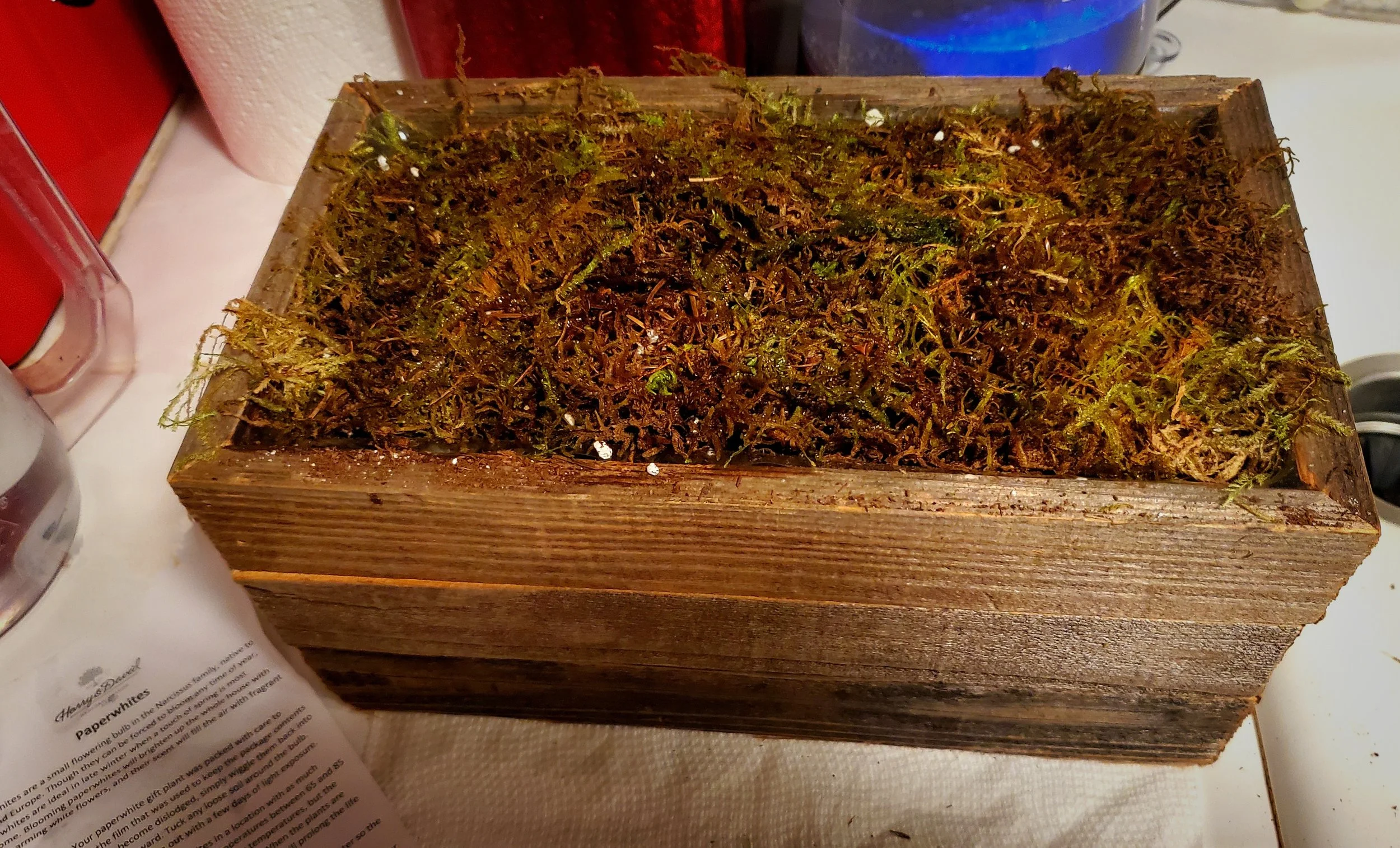
Read MoreI received a lovely gift surprise this week. (And as you ‘all know, carefully thought-out handmade gifts are my “love language.”) I was deeply touched to unpack a Harry and David carton- and discover a rustic, handmade wooden box filled with Paperwhite (Narcissus) bulbs-already planted in a fertile soil mix- and just waiting for me to water them and put them in the window, or outside in the garden.
Read MoreSo here we are, less than a week before Lent 2023. What does that mean for us, for you? I have been listening, for the better part of my life, to all kinds of suggestions as to what I should or should not do, what I can or cannot do, what the season is about, and how I can be more prepared for Easter.
Read MoreThe United Church of Hayward is an open and affirming church that serves the Bay Area community.
We are glad you’ve found us!
When the Israelite people were in the wilderness, Moses invited everyone whose "hearts were stirred and spirits were willing" to offer their gifts, time, and talents so the people could gather, worship God and serve the community. They discovered they had everything they needed and then some! Is your heart being stirred to support our UCH ministries in the Hayward area? Click here to make a difference!